



NEWS
ZHEJIANG ORYARWA COMMUNICATION EQUIPMENT CO..LTD
09
2025
-
03
Unraveling the Magic of Fiber Optic Connectors: How They Work
Understanding Fiber Optic Connectors
Ah, the world of technology! It's a whirlwind of gadgets, gizmos, and those oh-so-intriguing Fiber Optic Connectors. But what in the world are they, and how do they work? Buckle up, because we’re about to dive deep into the fiber optic realm.
What Is a Fiber Optic Connector?
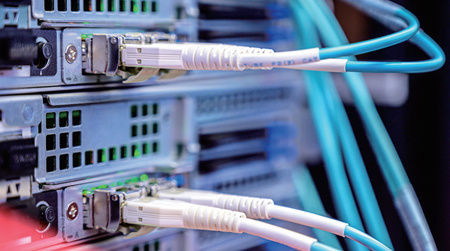
Simply put, a Fiber Optic Connector is a device that joins two optical fibers together. Think of it as the bridge that ensures that data travels swiftly and seamlessly from one point to another. Whether you're streaming your favorite series or having a video call with your grandma, these connectors play a huge role in keeping you connected.
The Science Behind the Connection
Now, let’s get a little technical, shall we? Fiber optic technology relies on light to transmit data. When light travels through the glass fibers, it bounces off the walls and continues its journey. This is known as total internal reflection. But to make this magic happen, connectors are the unsung heroes.
How Do They Work?
Alright, here’s where it gets interesting! Fiber optic connectors function by aligning the cores of the optical fibers. These cores are where the magic happens—the light signal travels through them. If the alignment is off, the signal can get lost, and that’s a real buzzkill.
Most connectors use a simple mechanism: the connector itself has a ferrule, a tiny tube that holds the fiber in place. When you push two connectors together, the ferrules align the fibers perfectly, allowing light to pass through without a hitch. Voila! Data flows like a smooth river.
Types of Fiber Optic Connectors
Just like how there are different types of phones for various needs, there are several types of Fiber Optic Connectors. Let’s break it down:
- SC (Subscriber Connector): Known for its push-pull design, it’s quite popular in telecom applications.
- LC (Lucent Connector): Smaller and compact, making it a great choice for high-density applications.
- ST (Straight Tip): A bayonet-style connector often used in multimode applications.
- MTP/MPO (Multi-fiber Termination Push-on): Designed for high-density applications, allowing multiple fibers in one connector.
Applications of Fiber Optic Connectors
Now, you might be wondering, “Where on earth are these connectors used?” Well, my friend, they’re everywhere! From telecommunications to medical instruments, they are the backbone of many modern systems.
Heck, they’re even used in military applications where data transfer speed and security are paramount. With the rapid growth of the internet and the push for faster connections, the demand for Fiber Optic Connectors is skyrocketing.
The Future of Fiber Optic Technology
Looking ahead, the future seems bright (and fiber-optic!) for these connectors. As we continue to rely on high-speed internet and advanced technologies, improvements in connector design and functionality are likely.
From reducing signal loss to simplifying installation, innovation is the name of the game. So, if you’re in the tech arena, keep your eyes peeled for the next big thing in fiber optics!
Wrapping It Up
There you have it! The scoop on Fiber Optic Connectors and how they work. They may be small, but they pack a punch when it comes to transmitting data. The next time you’re surfing the web at lightning speed, just remember the little connectors that make it all possible. Isn’t technology just fascinating?
Relevant news


CONTACT US
Add: No.1 Yonghe Third Road, Industrial Functional Zone, Chengdong Street, Yueqing City, Wenzhou City, Zhejiang Province
Tel: +86-577-62315998
Wechat : +86-15067871794
Fax: +86-577-62328331
E-mail: bonnie.chen@ouyahua.com